Download the book in PDF and let yourself be guided
through a story that intertwines a man, his land
and the family that preserves his legacy.
Meanwhile, in the last part of 2004, the process of sector organization and qualification of the Roero wine world was concluded. After a first phase – between the seventies and eighties – in which Roero's productions, particularly those linked to the Nebbiolo and Barbera vines, had been content with inclusion in the two territorial denominations (Nebbiolo d'Alba and Barbera d'Alba) that also involved various hills to the right of the Tanaro, in the eighties of the twentieth century the producers of the Left Bank of the Tanaro began to work to obtain their own denomination, especially for wines derived from Nebbiolo.
The first result materialized in 1985 with the recognition of the Roero Doc for red wines based on Nebbiolo (with a small percentage of Arneis grapes to better characterize them compared to Nebbiolo d'Alba which had Nebbiolo in purity as its ampelographic base).
The white wine produced on the Roero hills based on Arneis would obtain a similar recognition in 1989 as Roero Arneis Doc. A few years later (2004), both Roero and Roero Arneis would be recognized as Docg, thus completing their qualification process which would be further strengthened in 2017 with a new modification of the Production Discipline which would also officialize the Additional Geographical Mentions.
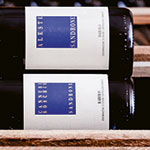
"Personally – Luciano emphasizes – I shared with enthusiasm this process of qualitative development and identity of the Roero territory. For me it was also the positive confirmation of the choice I had made in the nineties to try my hand with another Nebbiolo in another territory, namely the Nebbiolo d'Alba produced in the area of Valmaggiore in the municipality of Vezza d'Alba". As time passed, the characters of Luciano's Company became clearer and more defined. He often remembered it with satisfaction himself, highlighting the peculiarities of a production reality that over the years had become increasingly consolidated: "By my training and awareness I immediately tried to define my production reality with precise and well-structured characters. First of all, I have always believed that an agricultural company must produce its own wines by vinifying only the grapes from its own vineyards, both owned and rented, and that is what we have done and are doing with rigor and continuity. Furthermore, I preferred to design and produce a small number of wines, calibrated to our technical, technological and operational capabilities to guarantee each the professional commitment necessary to maintain a constant level of quality and typicality: three Barolos (Aleste which was originally Cannubi Boschis, Le Vigne and Vite Talin), Dolcetto d'Alba, Barbera d'Alba and Nebbiolo d'Alba Valmaggiore. Therefore, our range has remained limited to six wines, all red, those for which Langa and, more generally, Piedmont have always been territories of great name and election. Such a calibrated number of wines allows us to work every year on their identity and personality, supporting their qualitative level with an increasingly solid and prestigious image".
The 2000 vintage continued regularly and, at the end of the work in the vineyard, a "top-notch" harvest brought precious grapes to the cellar, capable of generating wines of great satisfaction.
The passage from 2002 to 2003 brought a radical change in the climate situation. In fact, many researchers had been talking about "climate change" since the previous decade, but the majority of producers only noticed it that year.
In 2004, with the presence in the company of larger spaces, including some air-conditioned warehouses and, therefore, suitable for the preservation of bottles of great vintages intended to be consumed in the following years
As the years passed, the Piedmontese wine world also continued to organize itself.
Between 2011 and 2014, the Luciano Sandrone Farm faced another important project to expand the cellar structure with the creation of the south-facing wing of the company building
In 2017, the 2013 Barolo completed its mandatory period of maturation and refinement.
Download the book in PDF and let yourself be guided
through a story that intertwines a man, his land
and the family that preserves his legacy.