Download the book in PDF and let yourself be guided
through a story that intertwines a man, his land
and the family that preserves his legacy.
Chapter 3
If Cantina Giacomo Borgogno had represented for Luciano his baptism into the world of
wine
almost like "that first love one never forgets", his time at Marchesi di
Barolo marked
the period of growth and full maturity.
He remained at this historic Barolo estate for quite a long period, a full 23
years, from 1967
to 1990. He had joined at barely 21 years of age and left at a considerably more mature stage in life, when
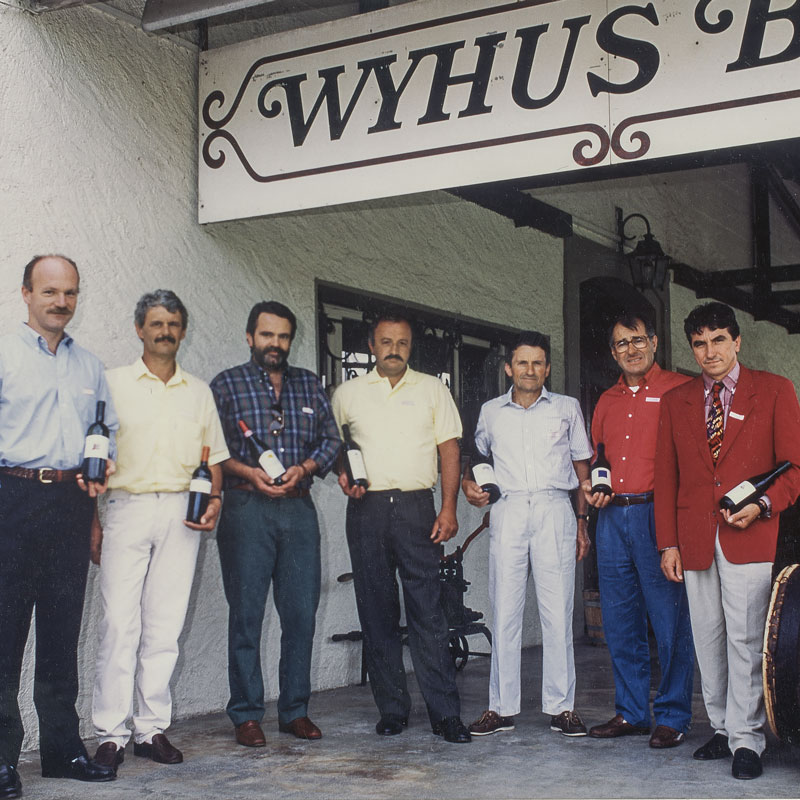
his sense of purpose was concrete and authoritative. For Luciano, Marchesi
di
Barolo was like a training arena, in which he grew with the right
gradualness,
refining his interpretive ability, accompanied by many other operators, technical and
otherwise,
who knew their trade and worked with passion to achieve the
best results.
"In the firm – Luciano recalls – I was mainly responsible for cellar work.
After a
period
of training and professional growth, little by little I was able to replace my
mentor
of those years, a certain Pinoto Scarzello who was the old cellarman and who – when I arrived
at Marchesi di Barolo – had welcomed me and helped me settle in. As was the custom in
those
times, however, I didn't only look after the cellar. The firm was large and complex. The work
sectors
were many and it was essential to deal with them comprehensively. Moreover it was essential
also
for me to learn many things. So I devoted my time to many other activities too:
at
certain moments I even had to act as chauffeur for the owners, then I'd keep an eye
on
the
vineyards and the various phases of their cultivation and this was the commitment I enjoyed
and
found most engaging. Especially in the early years of my time at Marchesi di
Barolo,
in
the viticulture and oenology sector the search for synergy between vineyard and cellar was not so
common.
It was
almost like a "Copernican revolution", but in subsequent years it would become standard
practice".
Then it was Luciano's responsibility to oversee the maintenance of the entire cellar complex at Via
Roma, a historic building, very prestigious, where history claimed the first Barolo had been
produced in the time of the Marchesi Falletti, the original owners. Precisely because it was a historic
construction it required more maintenance than
the
one in Via Alba, which had been built in a much more recent era.
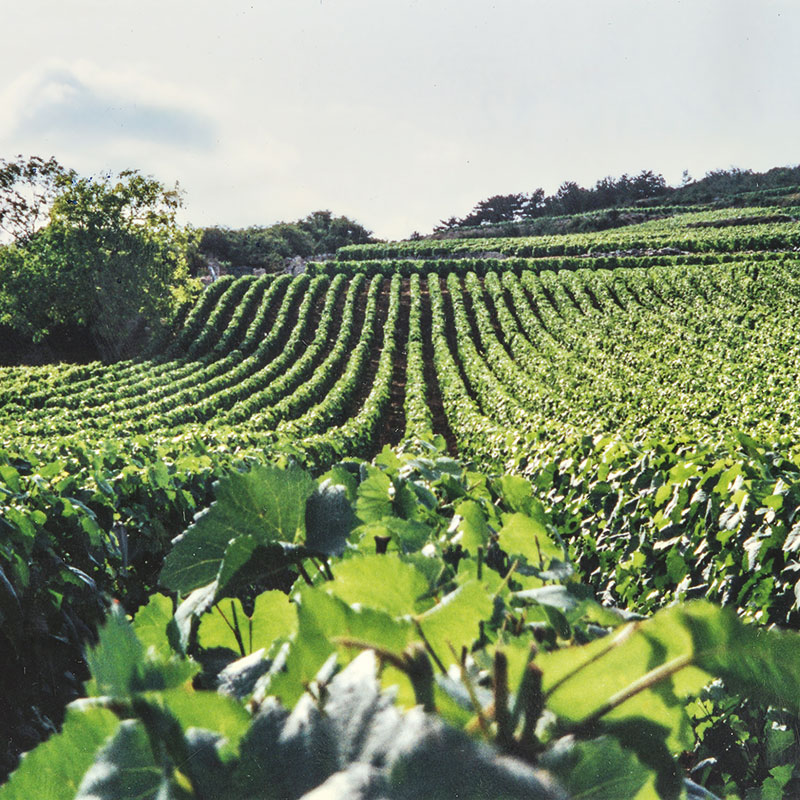
Also prompted by Cav. Felice Scarzello, he continued to visit the vineyards and
cellars of
France, particularly Burgundy. Luciano was keen to see and understand
how
they worked in
viticulture and oenology in that part of France so closely akin to the viticultural territory of
the
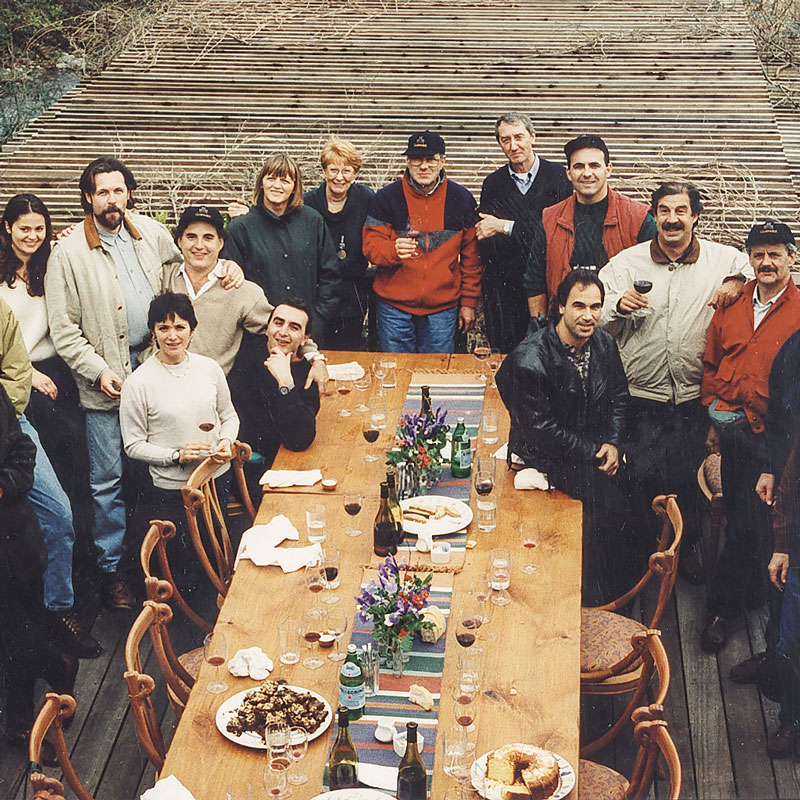
Langhe. Each time he returned, the group accompanying him grew larger. He
went there several times in the Eighties with many friends such as geometra Burzio, Aldo
Vacca,
Roberto Vezza, Fulvio Prandi and others. His brother
Luca often joined the group too. In those very years, he would have the good fortune to visit, thanks to his friend Fulvio
Prandi, the Romanée Contì, and this experience galvanised him enormously.
Meanwhile the years passed. The Sixties ended and the next decade began. The Barolo world continued its positive evolution.
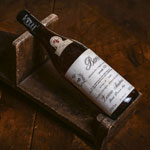
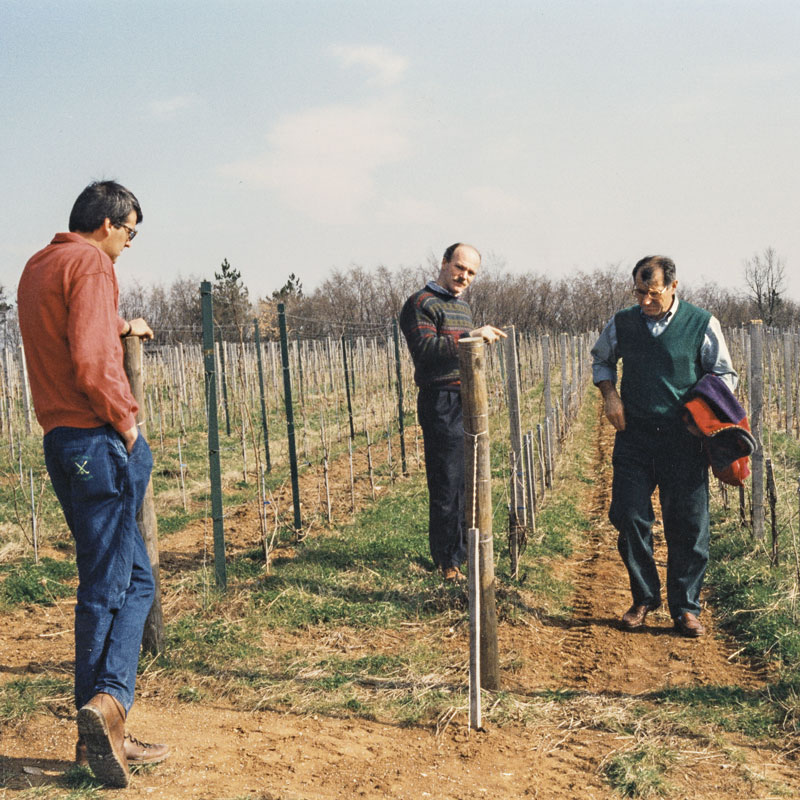
The memories crowd in and Luciano recalls: "My first Nebbiolo vineyard for Barolo was not large, barely more than a hectare, and its planting structure was still in decent shape, to the point that a good production could be obtained straight away.
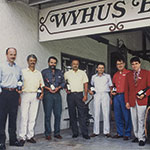
Meanwhile, Luciano's gaze was beginning to open to the world, both at an organisational level and at the level of promotion and market.
Download the book in PDF and let yourself be guided
through a story that intertwines a man, his land
and the family that preserves his legacy.