7.6 Physical controls and Additional Geographical Mentions

As the years passed, the Piedmontese wine world also continued to organize itself. An important step in its regulatory progress was the one started in 2006 with the "regional band" and completed after a while with the "State band".

"Aware of the problems related to commercial fraud that persisted despite the controls – Luciano confesses – we Piedmontese producers would have preferred that this 'physical control' start immediately with determination, involving the entire national sector. But as usually the novelties are difficult to actualize and, therefore, waiting for the conviction of the other Italian regions, we Piedmontese moved alone".

On Wednesday March 8, 2006, the Regional Viticultural Committee sanctioned the introduction of the regional band for Doc wines produced in Piedmont. It was not an easy birth, but in the end the dialogue between the components of the chain led to the desired result and so the Piedmont Region's Agriculture Department expressed a favorable opinion on the introduction of the regional band also for Doc as a final guarantee of the control plan for each single denomination.
After a few years of applying the regional band, they moved to the State band also for Doc wines, but the initiative did not find the consensus of all Italian regions. Once again the national wine sector had decided to travel at two speeds. Piedmont adopted the State band also for Doc wines and the result of this measure was the further qualification of a production sector – that of Doc wines – which is even more significant in quantity than that of Docg which since the eighties of the twentieth century already used this verification mechanism.
Between 2007 and 2010, the wine sector linked to the two Docgs Barolo and Barbaresco gave a new demonstration of maturity and resourcefulness. With the support of the Barolo and Barbaresco Consortium and the Municipalities of the two areas of origin, the so-called "Additional Geographical Mentions" were identified, delimited and officialized, then sigled with the acronym MGA, those that France many years before had defined "Cru".
For years the production world of these two wines would have wanted to identify and delimit the smallest parts of territory of the area of origin that had long been reported on the labels to better specify the origin of the wine itself. Examples of this type of indications had gradually increased starting from the sixties of the twentieth century when the most forward-looking producers had started to report on the labels of Barolo names like Cannubi, Cerequio, Bussia, Bricco Boschis, Brunate, Vignarionda, etc. and on those of Barbaresco names like Rabajà, Gallina, Asili, Montestefano, Pajorè, etc. But there were objective obstacles: on the one hand, a legislation born in the sixties and therefore not exactly suitable for regulating such indications; on the other hand, the slowness of institutional bodies to incorporate the novelties expressed by the sector and, finally, a understandable "laziness" of the production world engaged first of all in solving basic problems instead of dedicating itself to those of more perspective, but which it considered marginal.
Finally, the "Mentions" were introduced into the Italian legislative system by Law 164/92, with particular reference to the Additional Geographical Mentions, or traditional names used to indicate smaller areas of the area of origin of a denomination wine, Doc or Docg as it was. The passage from regulatory opportunities to the concrete realization of a territorial project relating to Barbaresco and Barolo was favored by the collaboration started in 1994 and continued until the early 2000s between the Barolo and Barbaresco Protection Consortium and the various Municipalities that constituted the areas of origin of the two Docg wines. At the end of the work, which lasted for several years, in the Barolo area 170 Additional Geographical Mentions were identified, which were incorporated by the new Discipline of 2010.

Among these also Cannubi Boschis, the Mention that distinguished one of Luciano Sandrone's Barolo wines. To these must also be added the 11 of municipal type. In the Barbaresco area, instead, the delimited Mentions were 72. Of these, 66 were those incorporated in 2007 by the new specific Discipline.

7.1
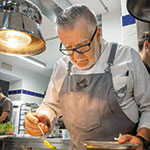
Quality also in the kitchen - success

Quality also in the kitchen

The 2000 vintage continued regularly and, at the end of the work in the vineyard, a "top-notch" harvest brought precious grapes to the cellar, capable of generating wines of great satisfaction.

7.2
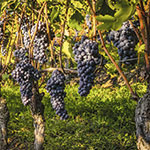
New year, new style - success

New year, new style

The 2000 vintage continued regularly and, at the end of the work in the vineyard, a "top-notch" harvest brought precious grapes to the cellar, capable of generating wines of great satisfaction.

7.3
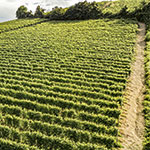
Here is climate change - success

Here is climate change

The passage from 2002 to 2003 brought a radical change in the climate situation. In fact, many researchers had been talking about "climate change" since the previous decade, but the majority of producers only noticed it that year.

7.4
Sibi et Paucis - success

Sibi et Paucis

In 2004, with the presence in the company of larger spaces, including some air-conditioned warehouses and, therefore, suitable for the preservation of bottles of great vintages intended to be consumed in the following years

7.5
With the passage of time - success

With the passage of time

Meanwhile, in the last part of 2004, the process of sector organization and qualification of the Roero wine world was concluded.

7.7
More frenetic years - success

More frenetic years

Between 2011 and 2014, the Luciano Sandrone Farm faced another important project to expand the cellar structure with the creation of the south-facing wing of the company building

7.8
The last steps towards stability - success

The last steps towards stability

In 2017, the 2013 Barolo completed its mandatory period of maturation and refinement.

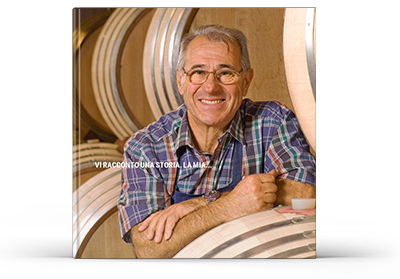
Download the book in PDF and let yourself be guided
through a story that intertwines a man, his land
and the family that preserves his legacy.

Download