Download the book in PDF and let yourself be guided
through a story that intertwines a man, his land
and the family that preserves his legacy.
Chapter 6
In the history of every wine there have been vintages that could be called "historic" or even "strategic". These are harvests in which meteorological conditions and a
series of other environmental factors have accompanied the vegetative and
productive cycle of the vine with such efficacy that grapes and wine of superlative character emerged: vintages and
wines in these cases are remembered over time as memorable.
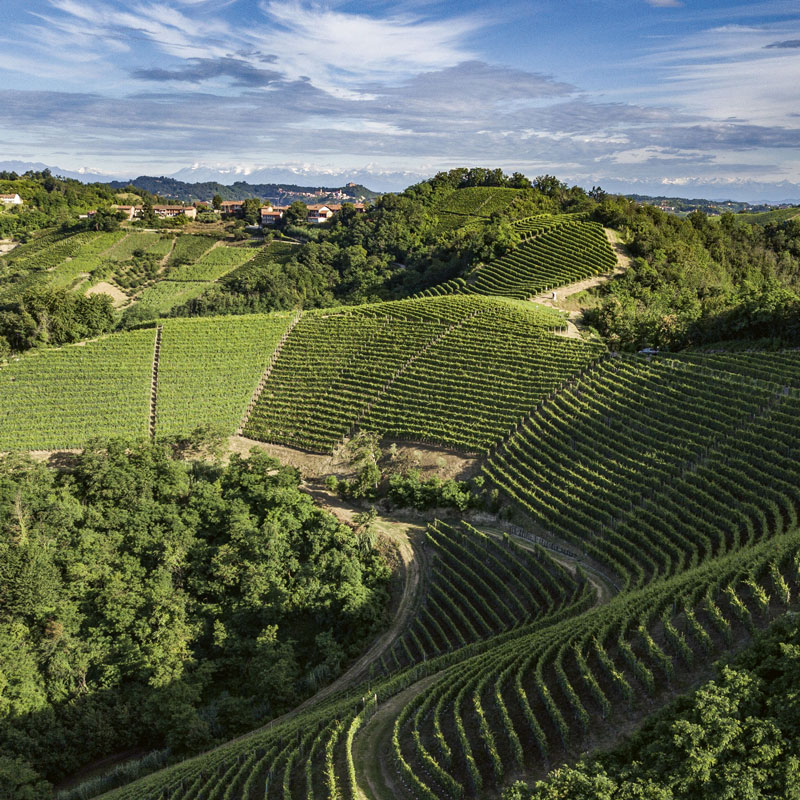
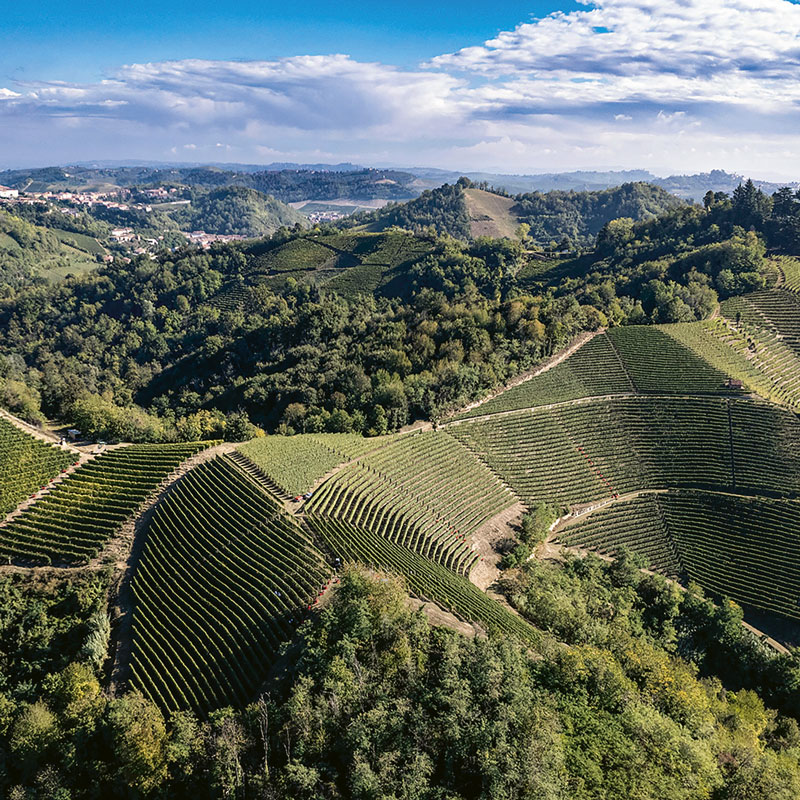
This "miracle of nature" is particularly evident at the latitudes of Piedmont, where
the
vine-covered hills are influenced every year by a climate we can define as
"cold-temperate",
the only climatic situation capable of giving rise to "fruity wines". One naturally wonders
what "cold-temperate" climate is like and what characterises "fruity wines".
It doesn't take long to explain. The "cold-temperate" climate – also called "continental" –
is
one that every year is formed by a varied cocktail of atmospheric elements where never
do
sun and heat prevail over the other meteorological manifestations. And this even if
lately the so-called "climate change" has reshuffled the cards somewhat, partially calling into question the certainties of the past.
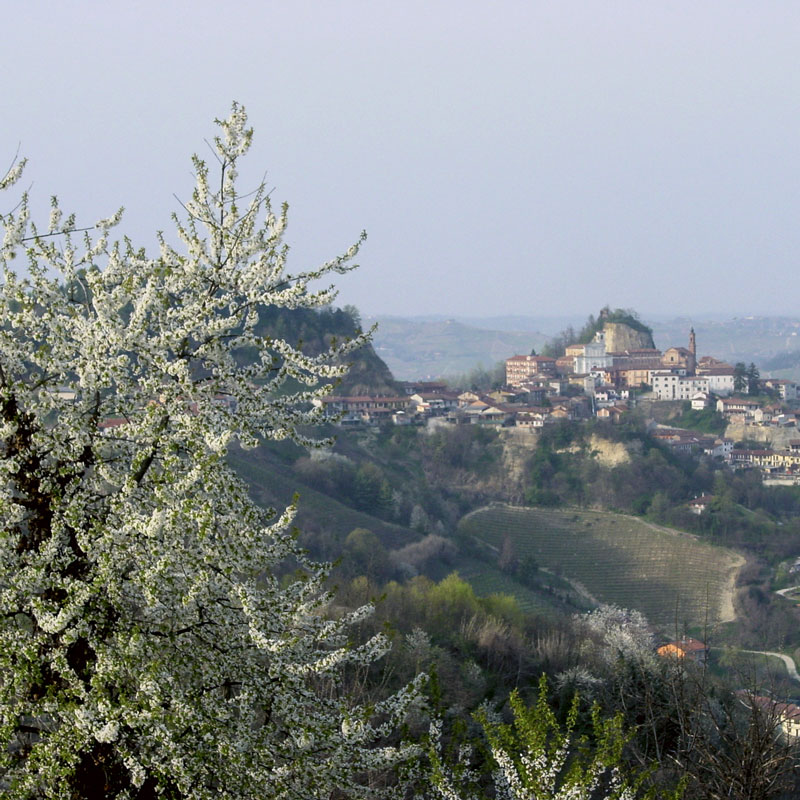
The Piedmontese hills (not only those of Langa and Roero) lie at the centre of a
territorial belt that crosses Europe from west (Portugal) to the far east (Hungary,
Romania, Ukraine, etc.). The climatic conditions particularly favourable to the vine are
generated within this belt (particularly as regards Piedmont) by
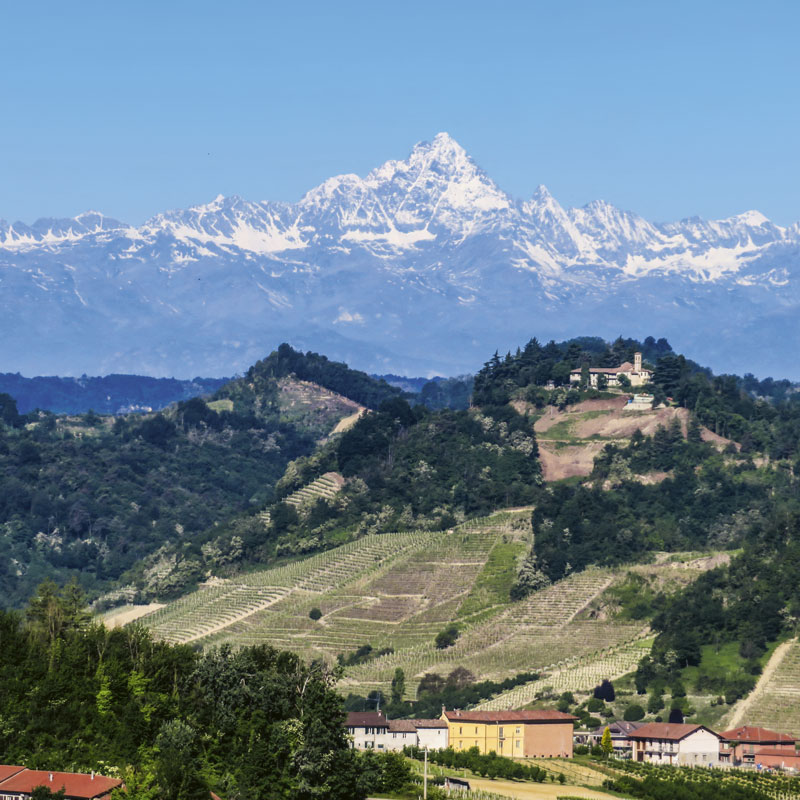
the presence of mountain ranges (the Ligurian Apennines and the Maritime Alps) which with their natural ramparts protect these hills from the influence of the Mediterranean climate, where sun and
heat are predominant common denominators.
In this belt of "continental" climate territory the "fruity wines" are produced, wines which
possess two characters of immense value:
In the Barolo world memorable vintages are not many, three or four per decade, with an increase in recent periods compared to a less generous past. Starting from the Forties of the last century we could indicate as "historic" the following vintages: 1947, 1957, 1958, 1961, 1964, 1970, 1971, 1978, 1982, 1985, 1989, 1990, 1996, 1997, 1999, 2000, 2001, 2004, 2008, 2009, 2013, 2016, 2019 and 2021.
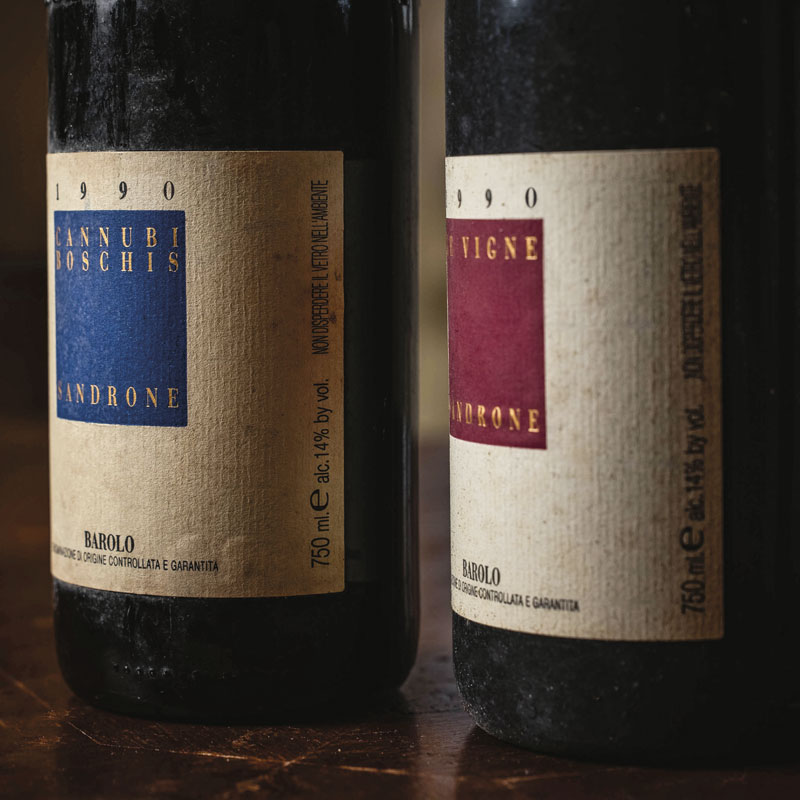
Luciano Sandrone, for his part, always revealed a particular fondness for the
1990 vintage. The reasons are summed up in his own words:
"I have always had a special love for the 1990 Barolo vintage. It was not the year of
my
debut as a wine producer, but it was certainly the vintage that first consecrated
the
great quality of our wines. I remember well the climatic alternation of that year: few
snowfalls during the winter months, an unstable pattern during spring and then,
a
decisive tendency towards heat in summer, with some very useful thunderstorms to refresh and
bring a water reserve to the plants. The ripening of the grapes therefore developed
in a perfect and uniform manner, with a high level of sugar and then
alcoholic structure. In particular, the Nebbiolo grapes for Barolo ripened in stable
atmospheric
conditions, with strong temperature swings between day and night and yielded wines of
great
breadth: intense and tenacious colours, broad and complete aromas, full and rich flavours".
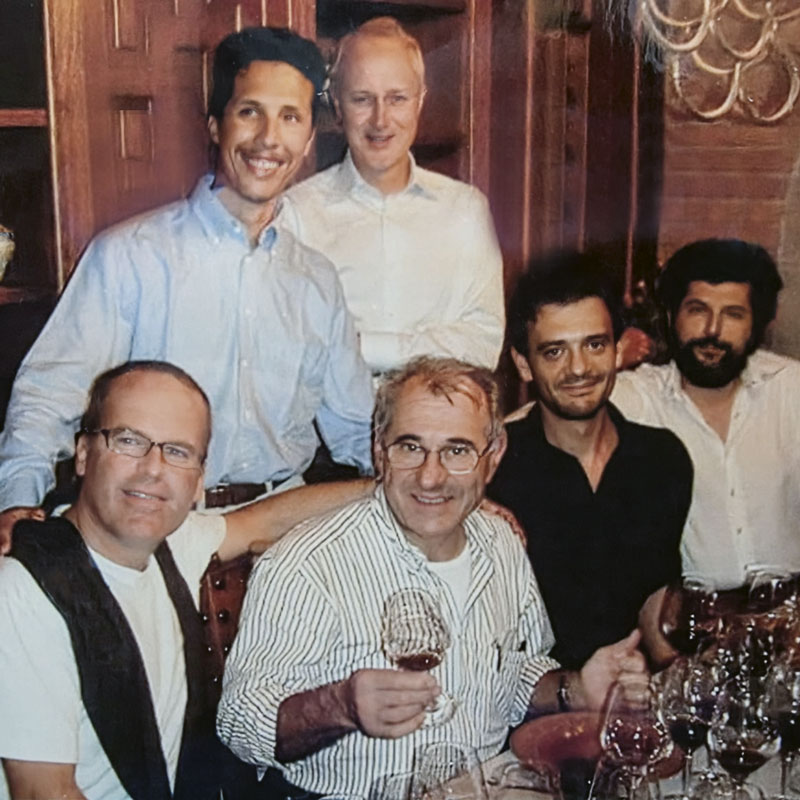
"I also remember, – Luciano continues with renewed enthusiasm – that when the 1990 Barolo
had
completed its ageing and refining period, in practice in 1994, Marc De
Grazia
brought Robert Parker to Langa, the editor of a very important and widely followed wine publication on Anglo-Saxon markets, "The Wine Advocate". In his tour of Langa
cellars,
Parker was also our guest and tasted our Barolo Cannubi
Boschis
1990, as well as
that of many other producers. The concrete result was a shower of very high scores that
Parker
awarded to these wines: I recall with pride that he assigned our Barolo Cannubi
Boschis a very high rating".
This feat triggered an enormous interest from a great many buyers – both private
and
professional – especially in the United States of America. The result was a vertiginous surge in sales and, consequently, in prices.
The effect on the image and identity of Barolo in its entirety, as well as on the
production of the individual winery, was so significant that even the subsequent vintages (between 1991
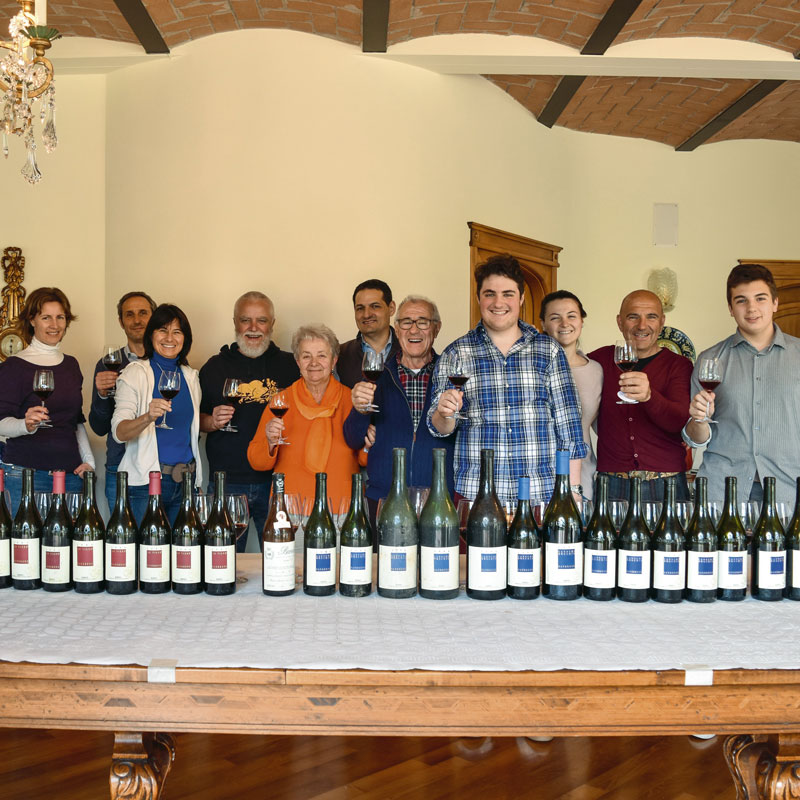
and 1994) – much less grand in terms of aromatic breadth, sapid structure and longevity – greatly benefited from it. At Casa Sandrone the positive effects were felt on both the single-vineyard Barolo (Cannubi Boschis) and the blended one (Le Vigne).
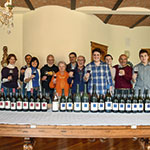
Between the late Eighties and the early Nineties, a new associative reality emerged in the wine world, destined to influence the subsequent development of the food and wine world
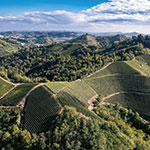
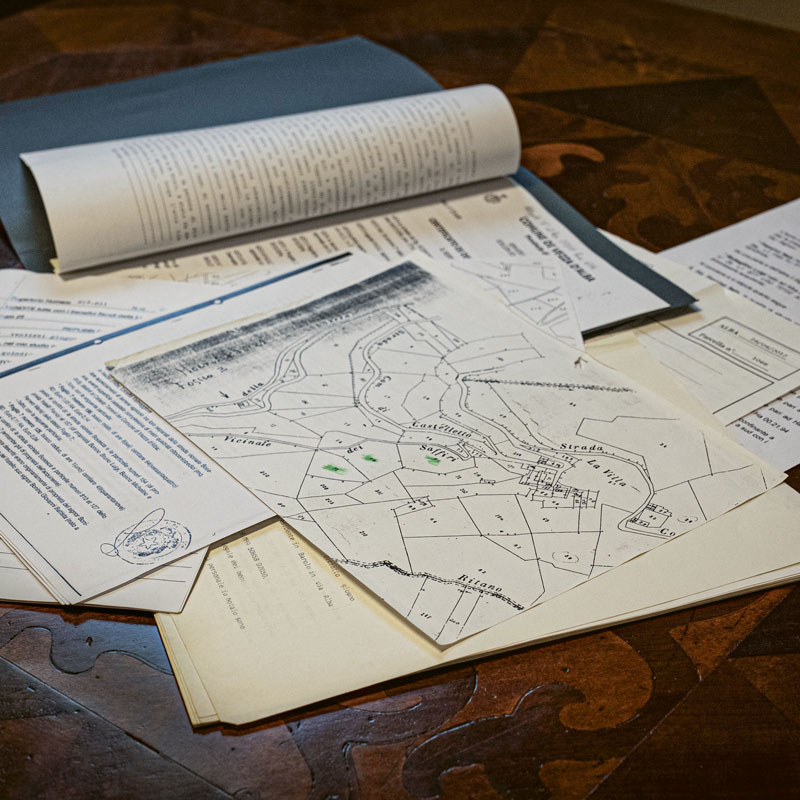
The story of Valmaggiore, the amphitheatre-shaped hill that occupies one of the most south-westerly areas of the village of Vezza d'Alba, in Roero
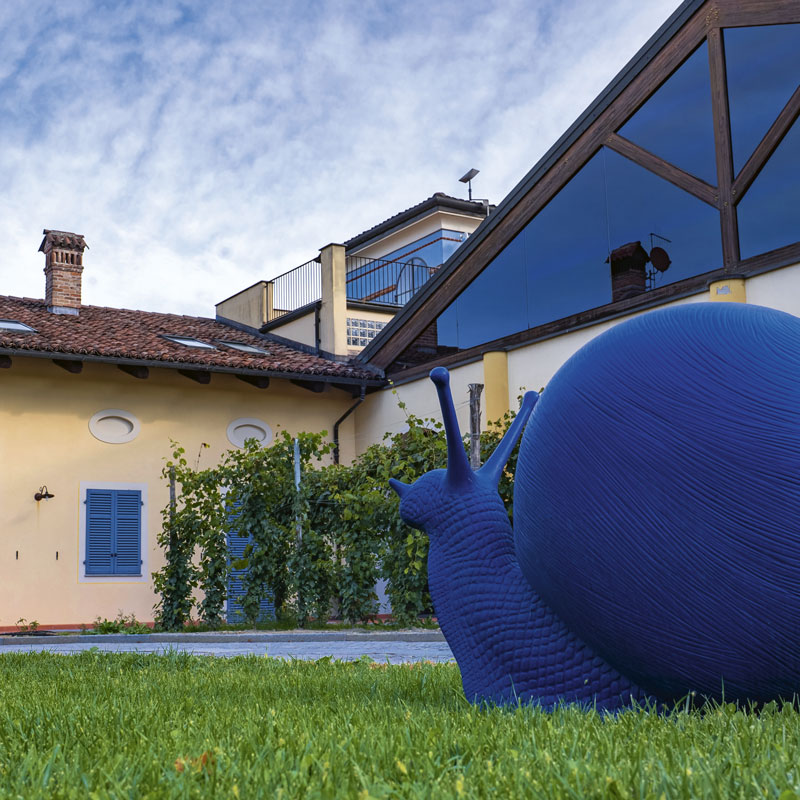
The gradual growth of the vineyards planted with Nebbiolo and the other two most widespread native varieties (Dolcetto and Barbera) was also generating an increase in the wine and bottles produced.
Download the book in PDF and let yourself be guided
through a story that intertwines a man, his land
and the family that preserves his legacy.