7.2 New year, new style

This is the summary that we could use to characterize the difference between 2001 and 2002. As much as 2001 had been meteorologically impeccable, with the right atmospheric events at the right time, so complicated proved to be the following 2002, which manifested an explicit tendency to cold, encountering evident difficulties in bringing to the grapes – and therefore to the wines – the structure and the capacity to resist time which are the characterizing features of a great Barolo.
"Even if the summer – Luciano recalls – struggled to take off and the heat was slow to arrive, the situation did not frighten me. After all, a prestigious company must know how to try its hand even with the most difficult vintages. Inside I thought that with the most appropriate technique, with careful management in summer and scrupulous grape harvesting we could have completed a quality production. The summer thinnings had been more rigorous and in the harvest we would have made a greater qualitative selection, but we hoped to count on a good quality vintage. Instead, like a bolt from the blue, a little less than a month from the start of the harvest, on September 5, 2002, the world of Barolo was affected by a bad storm with a disastrous hailstorm with its epicenter in the village of Barolo and, specifically, on the hill of Cannubi, where we produced our Barolo Cannubi Boschis. To add insult to injury: we had almost concluded an already expensive vintage and a hailstorm so disastrous arrived to take away a harvest that seemed within our reach".
Luciano was so upset by that so mocking hailing event that in the following years he could never properly take into account the 2002 vintage even for the Barolo Le Vigne, which – due to the fact of being produced in several vineyards scattered here and there in the area of origin – had not suffered the damage had by the Cannubi Boschis. The vintage had been complicated, the qualitative and quantitative results had been meager and the economic damage promised to be heavy for a company that had just finished building the new cellar. To all this would be added in the following months the bad evaluation of the 2002 Barolo dictated by the judgments of wine critics to complete a problematic framework. By virtue of all these negative factors, in the following years Luciano would never have wanted to hear about the 2002 vintage. He would not even have wanted to bottle it. Only the intervention of Luca and other company members made him desist from such a resolute attitude. Therefore, at least the Barolo Le Vigne 2002 was able to give its satisfactions.
In fact, only a part of that Barolo went into the bottle, but then it was sold almost quietly so as not to annoy Luciano's sensitivity. Today, of that Barolo Le Vigne 2002 in the cellar some bottles still remain and every time one is uncorked to taste it the comments are positive, in some cases even astonished. This was the case on September 5, 2023 when - on the occasion of a technical tasting of historic vintages in the company - the Barolo Le Vigne 2002 was described as follows: "Incredibly intense and youthful color for a vintage considered minor. On the nose it is rich, decisive and engaging. In flavor it is full, intense and persistent. Overall judgment: an intensely rich wine of beautiful pleasantness, in some ways still in positive evolution".

That the date of October 31, 2002 could become important for Piedmontese wine seemed possible to many observers: on that date there had been the recognition of the Controlled Designation of Origin "Alta Langa" for Classic Method sparkling wines from Pinot Noir and/or Chardonnay grapes produced on the hills of many villages located in Piedmont to the right of the Tanaro river. It had been talked about since March 5, 1990 when the "Classic Method Sparkling Wine Project in Piedmont" had been started, launched by seven Historic Houses (Cinzano, Contratto, Fontanafredda, Gancia, Martini & Rossi, Riccadonna and Vini Banfi) with the support of the Piedmont Region to demonstrate that the Piedmontese hills were also suited to such production. The one of October 31, 2002 was an important recognition, which confirmed years of technical, organizational and productive experimentation. The Piedmontese wine reality of the provinces of Cuneo, Asti and Alessandria had found itself with a new designation of origin wine and this confirmed the great attitude for quality wine of these hill lands. 2002 was the first vintage of production of Alta Langa Docg Classic Method.

7.1
Quality also in the kitchen - success

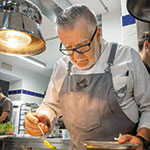
Quality also in the kitchen

The 2000 vintage continued regularly and, at the end of the work in the vineyard, a "top-notch" harvest brought precious grapes to the cellar, capable of generating wines of great satisfaction.

7.3
Here is climate change - success

Here is climate change

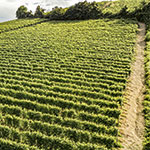
The passage from 2002 to 2003 brought a radical change in the climate situation. In fact, many researchers had been talking about "climate change" since the previous decade, but the majority of producers only noticed it that year.

7.4
Sibi et Paucis - success

Sibi et Paucis

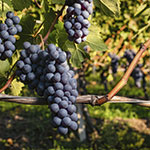
In 2004, with the presence in the company of larger spaces, including some air-conditioned warehouses and, therefore, suitable for the preservation of bottles of great vintages intended to be consumed in the following years

7.5
With the passage of time - success

With the passage of time

Meanwhile, in the last part of 2004, the process of sector organization and qualification of the Roero wine world was concluded.

7.6
Physical controls and Additional Geographical Mentions - success

Physical controls
and Additional Geographical Mentions

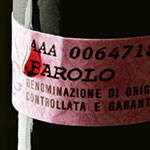
As the years passed, the Piedmontese wine world also continued to organize itself.

7.7
More frenetic years - success

More frenetic years

Between 2011 and 2014, the Luciano Sandrone Farm faced another important project to expand the cellar structure with the creation of the south-facing wing of the company building

7.8
The last steps towards stability - success

The last steps towards stability

In 2017, the 2013 Barolo completed its mandatory period of maturation and refinement.

Download the book in PDF and let yourself be guided
through a story that intertwines a man, his land
and the family that preserves his legacy.

Download