8.3 The new vineyards in production
Towards the middle of the 1990s, all the vineyards prepared with this type of vine
entered production. Year after year, the grapes ripened and yielded more wine.
Observations in the vineyard and in the cellar continued to confirm the results obtained in the
previous harvests. From the market point of view, however, Luciano still did not feel ready to
commit himself. Although he had already understood that those plants could yield a highly
interesting Barolo, something was still missing before a final judgement could be made. It
seemed that, despite all the effort invested and all the research carried out, he was not yet
able to "tame" that Barolo and train it into a thoroughbred with great prospects.
In 1999, as the century drew to a close, the establishment of the production activity in the
new cellar in Via Pugnane made it possible to further professionalise the vinification trials
of these very special grapes. Various vinification and ageing protocols were carried out and, as
the work progressed, Luciano became more and more convinced of the choice he had made and more
and more satisfied with the qualitative results these vines were delivering: in the cellar they
became a wine of fine structure and appeal.
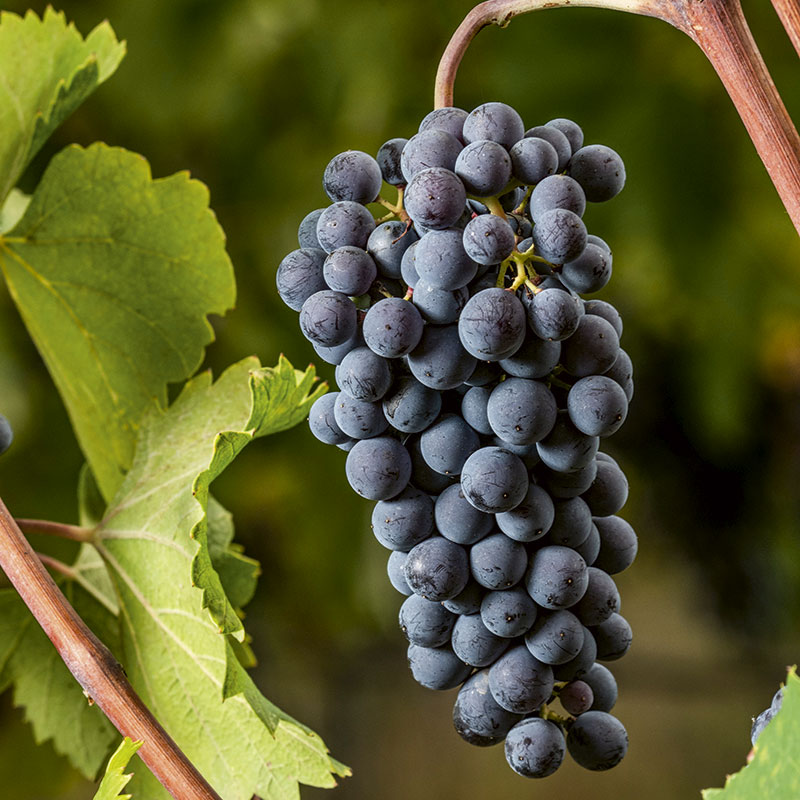
At every harvest, those small vineyards yielded very rich, clearly "concentrated"
grapes, and this required highly specific vinifications, maturations and ageing processes,
often different from those used for the Nebbiolo grapes produced in the company's other
vineyards.
"With this growing awareness, Luca recalls, we also wanted to bring this very special vine
back to Le Coste in Barolo, where Luciano had first identified it in 1987. In the meantime,
that plot had been suitably enlarged and we could count on about 6,000 square metres in a
single block. But Luciano continued to be haunted by one doubt: who knows whether these
vines obtained from that original plant found in 1987 are really Nebbiolo? Will it be
possible to obtain a Barolo from them or not? Without question, Luciano was proud
of having identified and cultivated such a particular vine, but he would have been even
prouder if that vine had truly turned out to be Nebbiolo. To understand that
and remove every doubt, there was only one road to take: to subject that plant to
DNA analysis."
In the meantime, time had passed. The 1990s and the twentieth century had become memories, and
the 2000s had begun. Luciano, working closely with Luca, had refined the cultivation technique
in the vineyard and then the cellar technique as well. It was essential to resolve that final
doubt.
Meanwhile, Luciano had already found a way to distinguish that Barolo from all the others. Out
of the old respect he had always held for the owner of the vineyard where he had discovered that
very special plant, Natale Ronzana by name, he chose "Vite Talin" as the
reference name for that new Barolo.
The first fully satisfactory production of this Barolo was that of the 2013
harvest.
Therefore, in 2017, in view of the launch of the commercialisation of that first vintage of
Barolo "Vite Talin", Luciano decided to contact the ampelographer Anna Schneider again and ask
her to proceed with DNA verification on that plant. Those too were weeks of trepidation.
There were many elements suggesting that it was Nebbiolo, but, as we know, the unexpected is
always just around the corner.
Instead, the "good news" reached Luciano on 12 September 2017. The DNA
analysis report made it clear that that singular vine was indeed Nebbiolo.
The rest belongs to today's story: in the meantime, the first sanitisation trials have been
carried out with excellent results thanks to the work of Dr Gribaudo, Schneider's colleague at
the CNR in Turin, and, at the same time, to the work of Alessia, Luciano's granddaughter, who
was studying at the Faculty of Agriculture in Trento.
In 2021, the first sanitised plants were planted in an experimental company field, that is to
say the kitchen garden behind the house, and in 2024 the first grafted young vines were planted
in the vineyard.
Thirty-seven years had passed since that fateful day in 1987. But they had not
passed in vain.
Today, Casa Sandrone, and more generally the whole world of Barolo, is richer than before. It
has a new protagonist among Nebbiolo vines, a vine found by chance or through a well-informed
intuition, but in any case capable of giving Barolo wines of notable qualitative interest,
always endowed with that precious longevity that allows the characteristics of origin to be
carried into a very distant future.
A further line of investigation is now underway thanks to the synergy with CREA, the Council
for Agricultural Research and Economics, Italy's main public research body dedicated to the
agri-food chain and supervised by the Ministry of Agriculture, Food Sovereignty and Forests. The
project currently being pursued concerns the aromatic characterisation of the grape and of the
wine produced from it.