8.1 A particular vine
One fine day, in the heart of that year, Luciano, while walking among the rows of a very small
Nebbiolo vineyard, barely more than a thousand square metres, which he cultivated in the Le
Coste area of Barolo and which belonged to a certain Natale Ronzana, suddenly came upon
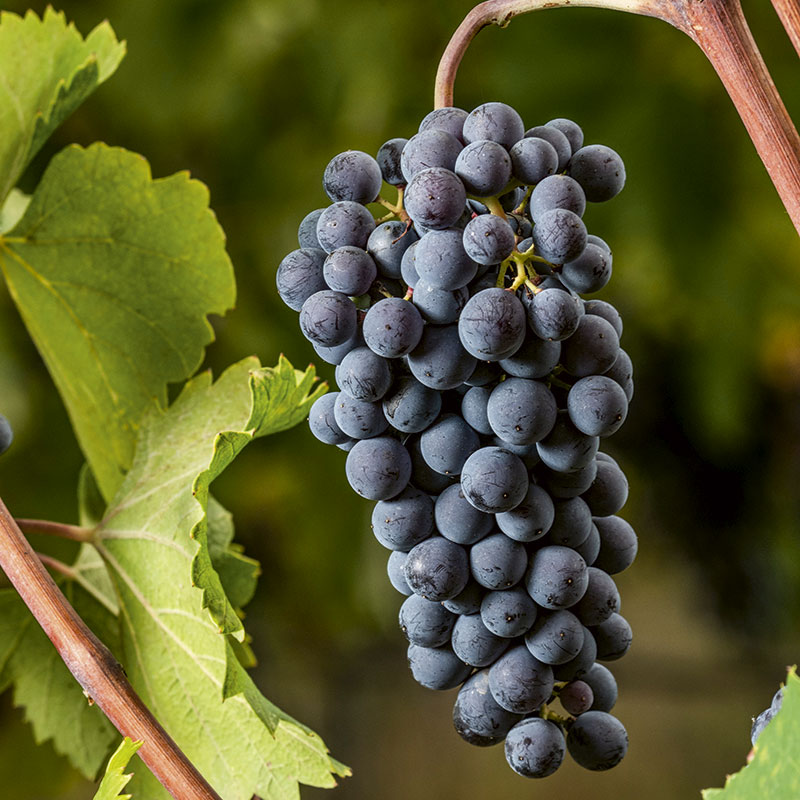
a vine with a very particular appearance, quite different from all the others in
that vineyard. It had small berries, somewhat stunted vegetation and showed a decidedly lower
yield than the others. He found it curious and inexplicable that he had picked out that vine
among so many others. Like finding a pearl in a sea of waves...
Luciano was immediately fascinated by it and, if you like, also a little unsettled, because
that plant seemed to embody his very own philosophy.
It was, in fact, a very particular historical period, in which there was a clear tendency, both
in viticulture and in applied research, to seek more stable situations and quantitatively
higher results, both in production and in consistency from one year to the next. One must not
forget that grape growing was coming out of a rather long period in which mixed farming had
prevailed, where the productive results of a farm came from various sources and, in
viticulture as in other crops, were not only modest but also very different from one year to
another. Even in clonal selection, which was beginning to take shape at that time, the goal was
not quality at all costs, but rather greater constancy over time and a more efficient
quantitative performance than in the past.
In the cellar as well, a true revolution had begun, represented most clearly by the
introduction of the barrique, a practice mediated by French experience in Burgundy and which at
that moment was gradually taking hold and would generate very different effects from one winery
to another.
In such an era, it seemed at the very least strange that Luciano should become
fascinated and intrigued by a plant that yielded less than the others: it
unmistakably underlined his strong inclination towards quality and towards the development of
production methods that, first and foremost, had to enhance the territory and the environment,
while placing quantity and purely economic aspects in the background.
"What seemed even more incredible, observes Luca Sandrone, was to realise that before
Luciano no one had noticed that plant, so singular. Not even the owner of the vineyard, who
had cultivated it with passion for many years. So Luciano decided it was worth learning
more about it. First of all, he wanted to discover the plant's characteristics in its
evolution over time. Then he would try to identify the features of the grapes in
the annual production and, by making a micro-vinification, also those of the
wine that would result from it. His curiosity was rewarded: when the grapes had ripened and
the vinification was carried out, the main parameters proved to be of great
interest, and so Luciano decided to continue the investigation, also because
he wanted to be sure that those findings were not merely the result of the productive
events of a single year."
Luciano decided to keep that vine under observation. In his mind, thoughts and doubts crowded
one over another, moving quickly from optimism to uncertainty. What if that plant were not
Nebbiolo? What a disappointment that would have been. But, on the other hand, the analysis of
its main morphological features seemed to confirm precisely the characteristics of Nebbiolo.
Yet what would happen the following year? In 1988, would the observations yield the same
results, or would they be different? Who knew...
With these hesitations in his heart, Luciano passed the winter months between 1987 and 1988
and, as spring approached, resumed cultivation with more enthusiasm than before. He had
understood that the only way to obtain answers was to investigate, and so he
began looking for someone who could help him learn more.
It was necessary to involve the ampelographers working at the CNR, the
National Research Council in Turin, who also collaborated with the Faculty of Agriculture of
the University of Turin, in particular Dr Anna Schneider, whom Luciano had heard on one of the
many occasions dedicated to sharing knowledge about Nebbiolo in the Barolo area. But how could
he meet her and arouse her interest?